| Titre : |
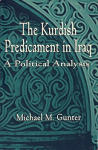
The Kurdish predicament in Iraq : a political analysis |
| Titre original : |
[La difficile situation kurde en Irak : une analyse politique] |
| Type de document : |
texte imprimé |
| Auteurs : |
Michael M. Gunter, Auteur |
| Editeur : |
New York (NY) [USA] : St. Martin's Press |
| Année de publication : |
1999 |
| Importance : |
181 p. |
| Présentation : |
Illustrations, cartes |
| Format : |
22 cm |
| ISBN/ISSN/EAN : |
978-0-312-21896-6 |
| Note générale : |
Notes, bibliographie, index |
| Langues : |
Anglais (eng) |
| Mots-clés : |
Kurdes, Politique et gouvernement. Irak. 20ème siècle Barzani Talabani KDP.PUK
Kurds Politics and government Iraq |
| Index. décimale : |
0410 Başûr / Kurdistana Iraqê | Bashur / Kurdistan d'Irak | Bashur / Iraqi Kurdistan | باشوور \ کوردستانی عێراق |
| Note de contenu : |
In May of 1992, the Iraqi Kurds held democratic elections that led to the formation of a Kurdistan Regional Government (KRG), in which power was equally shared by Massoud Barzani’s Kurdistan Democratic Party (KDP) and Jalal Talabani’s Patriotic Union of Kurdistan (PUK). During that same summer, the Iraqi Kurds also played a major role in the creation of an umbrella Iraqi opposition organization, the Iraqi National Congress (INC), whose professed goal was the creation of a democratic and federal post-Saddam Iraq in which the Kurdish problem would finally be solved. Jawar Namiq Salim, the speaker of the Kurdish Parliament, declared that a special human rights committee in parliament was not necessary because the entire legislative body would now serve as a human rights committee. Six turbulent years later, Michael Gunter looks at why everything went so horribly wrong. The Kurdish Predicament in Iraq is a political analysis of events in Iraq since 1992, based on the author’s extensive travels in Kurdistan and interviews with Kurds who participated in the government. The book examines the personalities of Barzani and Talabani, the Iraqi opposition to Saddam, in which the Kurds were a leading force, the continuing Iraqi Kurdistan civil war that began in May 1994, and the resulting power vacuum in Iraqi Kurdistan. Gunter provides an objective analysis, with the hope that it will lead to a better understanding of both the continuing tragedy in Iraqi Kurdistan and the chances that exist for renewed hope. |
| En ligne : |
http://www.loc.gov/catdir/enhancements/fy0601/98037355-b.html |
| Permalink : |
https://pmb.institutkurde.org/opac_css/index.php?lvl=notice_display&id=4016 |
The Kurdish predicament in Iraq = [La difficile situation kurde en Irak : une analyse politique] : a political analysis [texte imprimé] / Michael M. Gunter, Auteur . - New York (NY) [USA] : St. Martin's Press, 1999 . - 181 p. : Illustrations, cartes ; 22 cm. ISBN : 978-0-312-21896-6 Notes, bibliographie, index Langues : Anglais ( eng)
| Mots-clés : |
Kurdes, Politique et gouvernement. Irak. 20ème siècle Barzani Talabani KDP.PUK
Kurds Politics and government Iraq |
| Index. décimale : |
0410 Başûr / Kurdistana Iraqê | Bashur / Kurdistan d'Irak | Bashur / Iraqi Kurdistan | باشوور \ کوردستانی عێراق |
| Note de contenu : |
In May of 1992, the Iraqi Kurds held democratic elections that led to the formation of a Kurdistan Regional Government (KRG), in which power was equally shared by Massoud Barzani’s Kurdistan Democratic Party (KDP) and Jalal Talabani’s Patriotic Union of Kurdistan (PUK). During that same summer, the Iraqi Kurds also played a major role in the creation of an umbrella Iraqi opposition organization, the Iraqi National Congress (INC), whose professed goal was the creation of a democratic and federal post-Saddam Iraq in which the Kurdish problem would finally be solved. Jawar Namiq Salim, the speaker of the Kurdish Parliament, declared that a special human rights committee in parliament was not necessary because the entire legislative body would now serve as a human rights committee. Six turbulent years later, Michael Gunter looks at why everything went so horribly wrong. The Kurdish Predicament in Iraq is a political analysis of events in Iraq since 1992, based on the author’s extensive travels in Kurdistan and interviews with Kurds who participated in the government. The book examines the personalities of Barzani and Talabani, the Iraqi opposition to Saddam, in which the Kurds were a leading force, the continuing Iraqi Kurdistan civil war that began in May 1994, and the resulting power vacuum in Iraqi Kurdistan. Gunter provides an objective analysis, with the hope that it will lead to a better understanding of both the continuing tragedy in Iraqi Kurdistan and the chances that exist for renewed hope. |
| En ligne : |
http://www.loc.gov/catdir/enhancements/fy0601/98037355-b.html |
| Permalink : |
https://pmb.institutkurde.org/opac_css/index.php?lvl=notice_display&id=4016 |
|  |
 Accueil

 The Kurdish predicament in Iraq (1999)