[n° ou bulletin]
| Titre : |
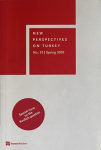
N° 32 - Spring 2005 - Special issue on the Kurdish question |
| Type de document : |
texte imprimé |
| Année de publication : |
2005 |
| Importance : |
230 p. |
| ISBN/ISSN/EAN : |
978-975-8293-83-4 |
| Note générale : |
Contributions de: Bilgen Ayata, Deniz Yukseker, Zeynep Gambetti, Murat Somer, Nilay Özok-Gündoğan, Leyla Sen, Ayşe Betül Çelik, Barış Karapınar, Fikret Gökalp, Yonca Köksal |
| Langues : |
Anglais (eng) |
| Index. décimale : |
0430 Bakur / Kurdistana Tirkiyeyê | Bakur / Kurdistan de Turquie | Bakur / Turkish Kurdistan | باکوور \ کوردستانی تورکیا |
| Note de contenu : |
The displacement of several hundred thousand people in the Kurdish populated southeastern region of Turkey during the 1990s and recent deliberations about how to protect and assist them constitute a very important case which demonstrates the nexus between the workings of the interstate system, state sovereignty and the regulation and control of target populations. After years of neglecting the plight of people evicted from their homes in the course of the armed conflict with Kurdish guerillas, Turkish authorities have agreed to tackle this problem under international pressure within the context of Turkey’s bid to join the European Union. The official perspective has shifted in recent years from denying this phenomenon and ignoring its consequences to an ambiguous policy of regulation.
In this essay,1 we argue that this regulation takes place within the framework of a depoliticized policy discourse centered on “regional development” which is taking shape in the course of the interactions between the Turkish government, the EU and the UN. We say that this discourse is depoliticized since it disentangles the phenomenon of internal displacement from the Kurdish issue2 as a political problem and instead links it to a “technical” agenda of development. In this process, issues of accountability, justice and reconciliation are tacitly circumvented not only by the government, but by the EU and the UN as well. (Extrait de l'introduction) |
| Permalink : |
https://pmb.institutkurde.org/opac_css/index.php?lvl=bulletin_display&id=442 |
[n° ou bulletin]
N° 32 - Spring 2005 - Special issue on the Kurdish question [texte imprimé] . - 2005 . - 230 p. ISBN : 978-975-8293-83-4 Contributions de: Bilgen Ayata, Deniz Yukseker, Zeynep Gambetti, Murat Somer, Nilay Özok-Gündoğan, Leyla Sen, Ayşe Betül Çelik, Barış Karapınar, Fikret Gökalp, Yonca Köksal Langues : Anglais ( eng)
| Index. décimale : |
0430 Bakur / Kurdistana Tirkiyeyê | Bakur / Kurdistan de Turquie | Bakur / Turkish Kurdistan | باکوور \ کوردستانی تورکیا |
| Note de contenu : |
The displacement of several hundred thousand people in the Kurdish populated southeastern region of Turkey during the 1990s and recent deliberations about how to protect and assist them constitute a very important case which demonstrates the nexus between the workings of the interstate system, state sovereignty and the regulation and control of target populations. After years of neglecting the plight of people evicted from their homes in the course of the armed conflict with Kurdish guerillas, Turkish authorities have agreed to tackle this problem under international pressure within the context of Turkey’s bid to join the European Union. The official perspective has shifted in recent years from denying this phenomenon and ignoring its consequences to an ambiguous policy of regulation.
In this essay,1 we argue that this regulation takes place within the framework of a depoliticized policy discourse centered on “regional development” which is taking shape in the course of the interactions between the Turkish government, the EU and the UN. We say that this discourse is depoliticized since it disentangles the phenomenon of internal displacement from the Kurdish issue2 as a political problem and instead links it to a “technical” agenda of development. In this process, issues of accountability, justice and reconciliation are tacitly circumvented not only by the government, but by the EU and the UN as well. (Extrait de l'introduction) |
| Permalink : |
https://pmb.institutkurde.org/opac_css/index.php?lvl=bulletin_display&id=442 |
|  |
 Accueil