| Titre : |
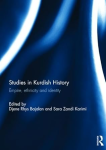
Studies in Kurdish history : Empire, ethnicity and identity |
| Titre original : |
[Etudes d'histoire kurde : empire, ethnicité et identité] |
| Type de document : |
texte imprimé |
| Auteurs : |
Djene Rhys Bajalan, Éditeur scientifique ; Sara Zandi Karimi, Éditeur scientifique |
| Editeur : |
Londres, New York [Royaume-Uni, USA (NY)] : Routledge |
| Année de publication : |
2015 |
| Importance : |
179 p. |
| ISBN/ISSN/EAN : |
978-1-138-06164-4 |
| Langues : |
Anglais (eng) |
| Mots-clés : |
Histoire Ethnonymes arabes Medrese Cheikh Ubeidullah Kurdistan Rouge République de Turquie Syrie mandataire |
| Index. décimale : |
1000 Dîroka hemî serdeman yan pir serdeman | Histoire toutes périodes ou plusieurs périodes | History, all or several periods | مێژووی هەموو چاخەکان یان چەندان چاخ |
| Résumé : |
This edited book is a collection of articles originally published in a special issue of the journal Iranian Studies under the name “The Kurds and their History: New Perspectives”, co-edited by Djene Rhys Bajalan and Sara Zandi Karimi. The chapters are organised in chronological order.
After a brief introduction by the two co-editors (pp. 1–3), the second chapter (pp. 4–33) is a study by Boris James on the use of the word “Kurd” in Arabic medieval sources. Taking issue with the view that the term “Kurd” would be a synonym of “nomadic”, he distinguishes two phases in the use of the term: a first phase (8th–11th century) where it is “at the crossroads between [Arab and ʿAjam]” (p. 12) and related to the concepts of “nomadism-bedouinness and Arabness” (p. 16), and a second phase (11th–14th century) where it became “an ethnonym among others” (p. 17). [...]
The third chapter (pp. 34–54), written by Michiel Leezenberg, is titled “Elî Teremaxî and the Vernacularization of Medrese Learning in Kurdistan”. It is part of a larger project of the author examining the rise of “new linguistic ideologies” in the 18th century as “one of the central preconditions of language-based nationalism” (p. 42). The study focuses on Elî Teremaxî’s Tesrîf, a work on sarf (morphology) written in and on Kurdish and dated by the author to the late 17th/early 18th century. After describing its contents, the author argues that the Tesrîf “embodies (…) the so-called vernacularization of Kurdish” that is the gradual development of a high culture in the language (p. 41). The second part of the article deals with medrese learning in Kurdistan, contending that the 17th century witnessed “a broader shift towards using Kurdish as a medium of both spoken and written medrese instruction”. [...]
The fourth chapter (pp. 55–118) by Sabri Ateş is an extremely detailed and well-researched study of the 1880–81 rebellion of the Naqshbandi Sheikh Ubeidullah of Nehri, a movement to which virtually all contemporary authors trace “the origins of Kurdish nationalism” (p. 56). The first part of the essay is a comprehensive narrative of the rebellion (pp. 60–106), while the second part consists of an analytical treatment exploring the Sheikh’s motives and various other aspects of the movement (pp. 106–118). [...]
In Chapter 5 (pp. 119–42), Harun Yilmaz studies “the Rise of Red Kurdistan”, that is the Kurdish enclave at Laçin, in the first two decades of the Soviet Union. The title of this work is a little misleading as it is mainly focused on the development of Kurdish-language education in the SSR of Azerbaijan. [...]
In the sixth chapter (pp. 143–57), Serhat Bozkurt studies the “continuities and discontinuities” in the settlement policies towards the Kurds of the late-Ottoman and early Republican eras. He specifically compares two constitutional documents, the Ordinance adopted in 1916 by the Committee of Union and Progress (CUP), and the 1934 law on settlement policies of the Republican government. [...]
In Chapter 7 (pp. 158–74), Jordi Tejel analyses the cultural activities of prominent Kurdish intellectuals in exile and their relations with French authorities in mandatory Syria. The author contends that after the failure of the revolt of Ararat (1926–30), these intellectuals launched “a cultural Kurdish renaissance” on the Armenian model, thus operating a move back to the “intellectual activities of the Ottoman period” (p. 167). [...] (Abstracted from Sacha Alsancakli's review in "Kurdish Studies Archive" Vol. 4 No. 2, 2016, on Brill website) |
| Note de contenu : |
Contributions de : Boris James, Michiel Leezenberg, Sabri Ateş, Harun Yilmaz, Serhat Bozkurt, Jordi Tejel Gorgas. |
| Permalink : |
https://pmb.institutkurde.org/opac_css/index.php?lvl=notice_display&id=9092 |
Studies in Kurdish history = [Etudes d'histoire kurde : empire, ethnicité et identité] : Empire, ethnicity and identity [texte imprimé] / Djene Rhys Bajalan, Éditeur scientifique ; Sara Zandi Karimi, Éditeur scientifique . - Londres, New York [Royaume-Uni, USA (NY)] : Routledge, 2015 . - 179 p. ISBN : 978-1-138-06164-4 Langues : Anglais ( eng)
| Mots-clés : |
Histoire Ethnonymes arabes Medrese Cheikh Ubeidullah Kurdistan Rouge République de Turquie Syrie mandataire |
| Index. décimale : |
1000 Dîroka hemî serdeman yan pir serdeman | Histoire toutes périodes ou plusieurs périodes | History, all or several periods | مێژووی هەموو چاخەکان یان چەندان چاخ |
| Résumé : |
This edited book is a collection of articles originally published in a special issue of the journal Iranian Studies under the name “The Kurds and their History: New Perspectives”, co-edited by Djene Rhys Bajalan and Sara Zandi Karimi. The chapters are organised in chronological order.
After a brief introduction by the two co-editors (pp. 1–3), the second chapter (pp. 4–33) is a study by Boris James on the use of the word “Kurd” in Arabic medieval sources. Taking issue with the view that the term “Kurd” would be a synonym of “nomadic”, he distinguishes two phases in the use of the term: a first phase (8th–11th century) where it is “at the crossroads between [Arab and ʿAjam]” (p. 12) and related to the concepts of “nomadism-bedouinness and Arabness” (p. 16), and a second phase (11th–14th century) where it became “an ethnonym among others” (p. 17). [...]
The third chapter (pp. 34–54), written by Michiel Leezenberg, is titled “Elî Teremaxî and the Vernacularization of Medrese Learning in Kurdistan”. It is part of a larger project of the author examining the rise of “new linguistic ideologies” in the 18th century as “one of the central preconditions of language-based nationalism” (p. 42). The study focuses on Elî Teremaxî’s Tesrîf, a work on sarf (morphology) written in and on Kurdish and dated by the author to the late 17th/early 18th century. After describing its contents, the author argues that the Tesrîf “embodies (…) the so-called vernacularization of Kurdish” that is the gradual development of a high culture in the language (p. 41). The second part of the article deals with medrese learning in Kurdistan, contending that the 17th century witnessed “a broader shift towards using Kurdish as a medium of both spoken and written medrese instruction”. [...]
The fourth chapter (pp. 55–118) by Sabri Ateş is an extremely detailed and well-researched study of the 1880–81 rebellion of the Naqshbandi Sheikh Ubeidullah of Nehri, a movement to which virtually all contemporary authors trace “the origins of Kurdish nationalism” (p. 56). The first part of the essay is a comprehensive narrative of the rebellion (pp. 60–106), while the second part consists of an analytical treatment exploring the Sheikh’s motives and various other aspects of the movement (pp. 106–118). [...]
In Chapter 5 (pp. 119–42), Harun Yilmaz studies “the Rise of Red Kurdistan”, that is the Kurdish enclave at Laçin, in the first two decades of the Soviet Union. The title of this work is a little misleading as it is mainly focused on the development of Kurdish-language education in the SSR of Azerbaijan. [...]
In the sixth chapter (pp. 143–57), Serhat Bozkurt studies the “continuities and discontinuities” in the settlement policies towards the Kurds of the late-Ottoman and early Republican eras. He specifically compares two constitutional documents, the Ordinance adopted in 1916 by the Committee of Union and Progress (CUP), and the 1934 law on settlement policies of the Republican government. [...]
In Chapter 7 (pp. 158–74), Jordi Tejel analyses the cultural activities of prominent Kurdish intellectuals in exile and their relations with French authorities in mandatory Syria. The author contends that after the failure of the revolt of Ararat (1926–30), these intellectuals launched “a cultural Kurdish renaissance” on the Armenian model, thus operating a move back to the “intellectual activities of the Ottoman period” (p. 167). [...] (Abstracted from Sacha Alsancakli's review in "Kurdish Studies Archive" Vol. 4 No. 2, 2016, on Brill website) |
| Note de contenu : |
Contributions de : Boris James, Michiel Leezenberg, Sabri Ateş, Harun Yilmaz, Serhat Bozkurt, Jordi Tejel Gorgas. |
| Permalink : |
https://pmb.institutkurde.org/opac_css/index.php?lvl=notice_display&id=9092 |
|  |
 Accueil

 Studies in Kurdish history (2015)